
Mark the working diameter and say whether a centre hole can stay in the finished shaft.
Take a small steel locating pin. Its larger end gives the supplier somewhere to grip it, while the long, narrow shank has to slide into a mating bush. The shank can flex under a sideways load from the tool. Where the supplier can support it, and what the end face has to do in the assembly, can change the work that goes into the quote.
Hold a ruler down at the edge of a bench and press on the free end. It bends more as you let more of it stick out. A slender shaft can move under the tool in a similar way. Too much movement during a cut can leave the diameter uneven, and vibration can leave chatter marks. [1]
For the locating pin, show where the shank runs in the bush and give the tolerance over that length. The larger end can be held firmly in the chuck while the smaller shank still flexes. When discussing the set-up, use the diameter at the cut and ask how far it will be from a support. [1]
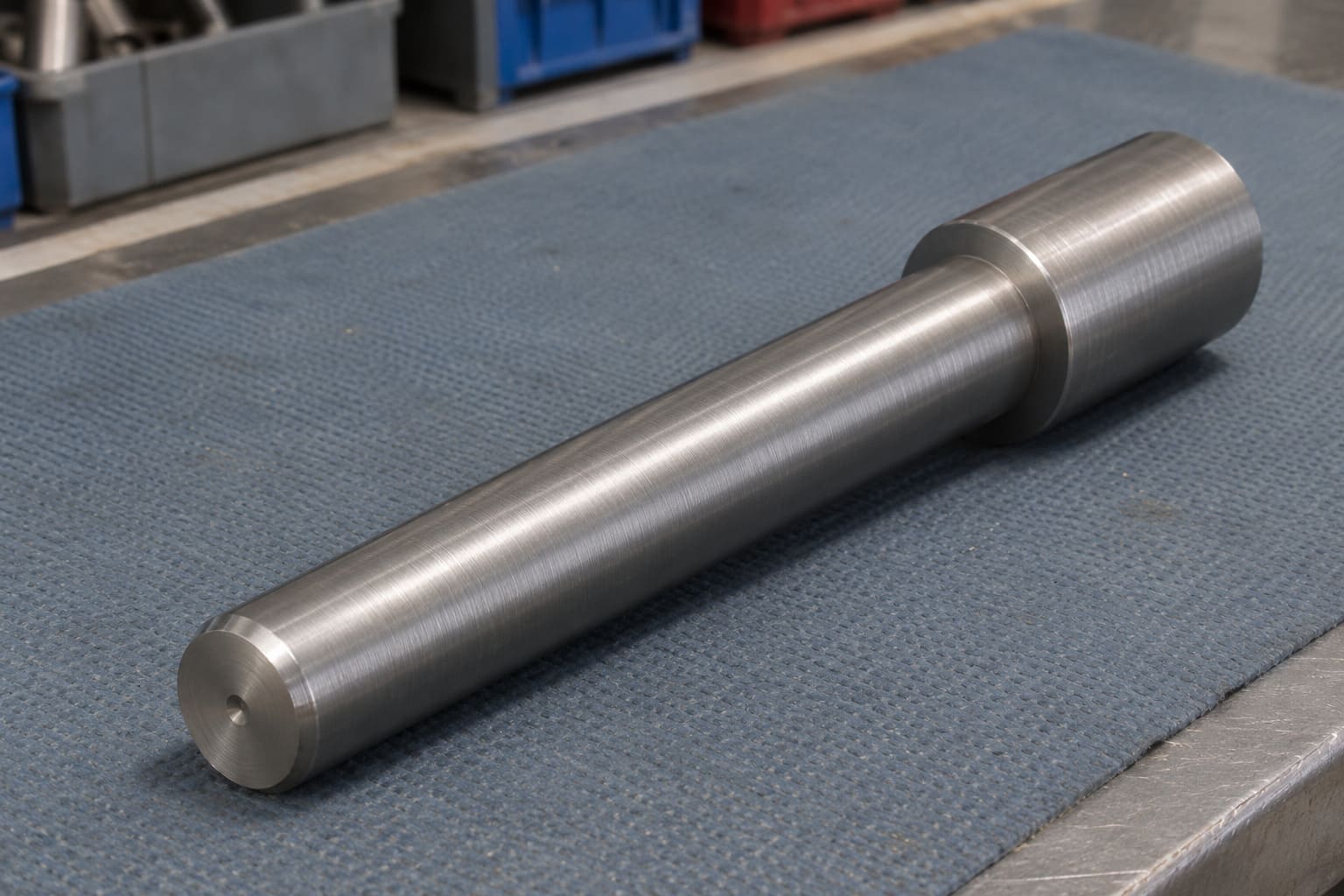
The locating pin has one shoulder and a small centre recess at the end of the working shank.
On a conventional lathe, a chuck can grip the larger end. The tailstock carries a live centre. Its point seats in a small conical recess drilled in the free end and turns with the shaft. If the pin can retain the recess and the centre leaves room for the tool, ask for a price using this set-up. [2]
If the shoulder locates the pin and the tip has clearance, the designer may allow a centre hole to stay. A tip that bears against a mating part needs its contact area shown on the drawing. Where that face sets the working length, dimension the length from the shoulder to the finished face.
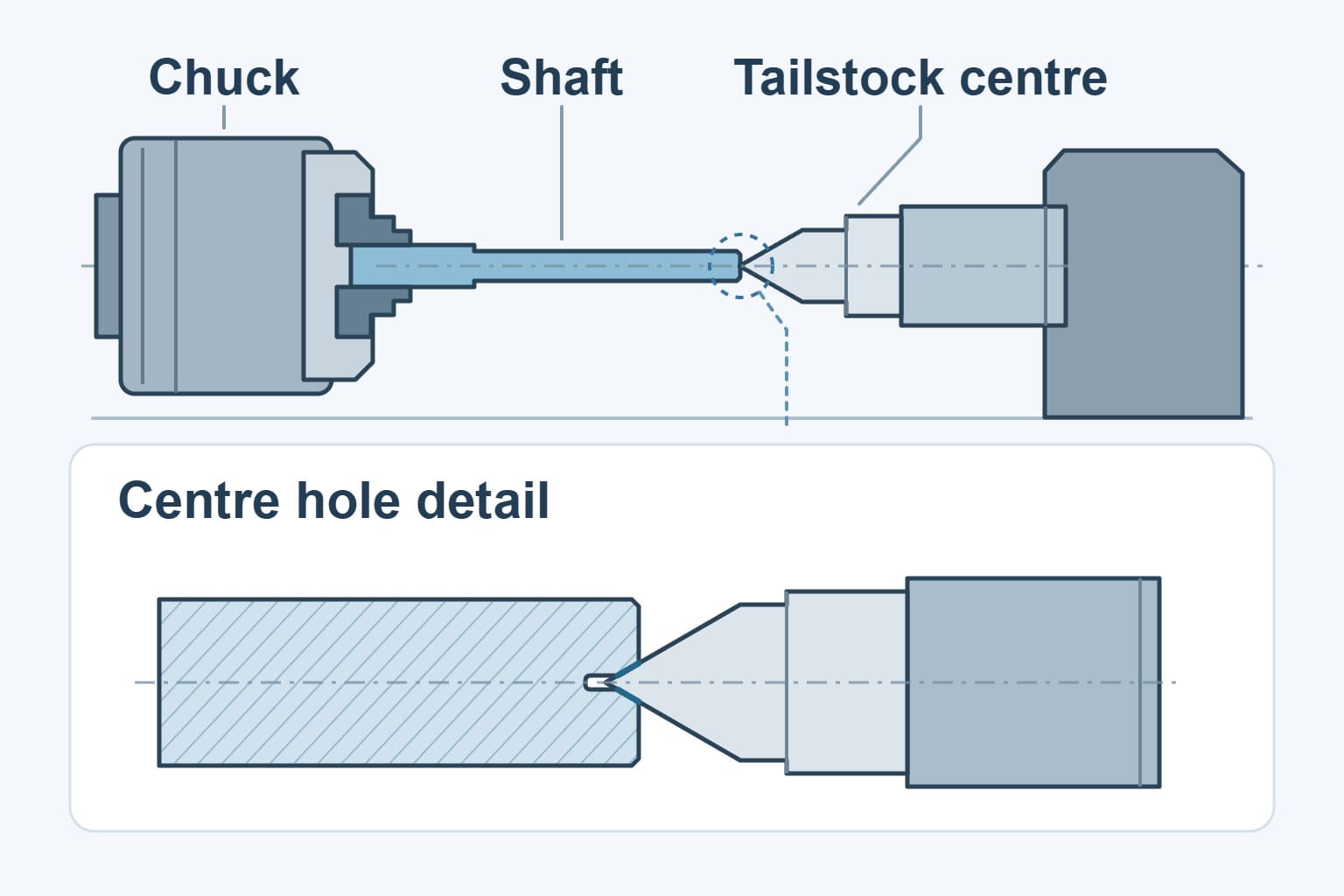
The chuck grips the larger end. The enlarged view shows the live centre seated in the centre hole. Technical illustration.
If the pin needs a flat face across the full end, ask how the supplier plans to finish it. One option is to leave extra length for the centre and face away that stock later. A steady rest is another way to support a shaft where there is an accessible, round section for the rollers to bear on. If that section has a function in the assembly, agree where contact is acceptable. [3]
On a Swiss-type lathe with a guide bush, the bar feeds through the bush as the tool cuts nearby. The short span between the support and the tool helps limit deflection. If the pin has to hold a close fit along a long, narrow shank, ask for a quote using this arrangement. Check which end operations the supplier can do in that set-up. [4]
Ask what bar stock the proposed set-up needs. Straightness and diameter variation affect how the stock feeds through a guide bush. Some set-ups call for ground bar, so check that the specified grade is available in the required condition and that the price includes it. Give the supplier both the first order quantity and the likely repeat demand. [5] [6]
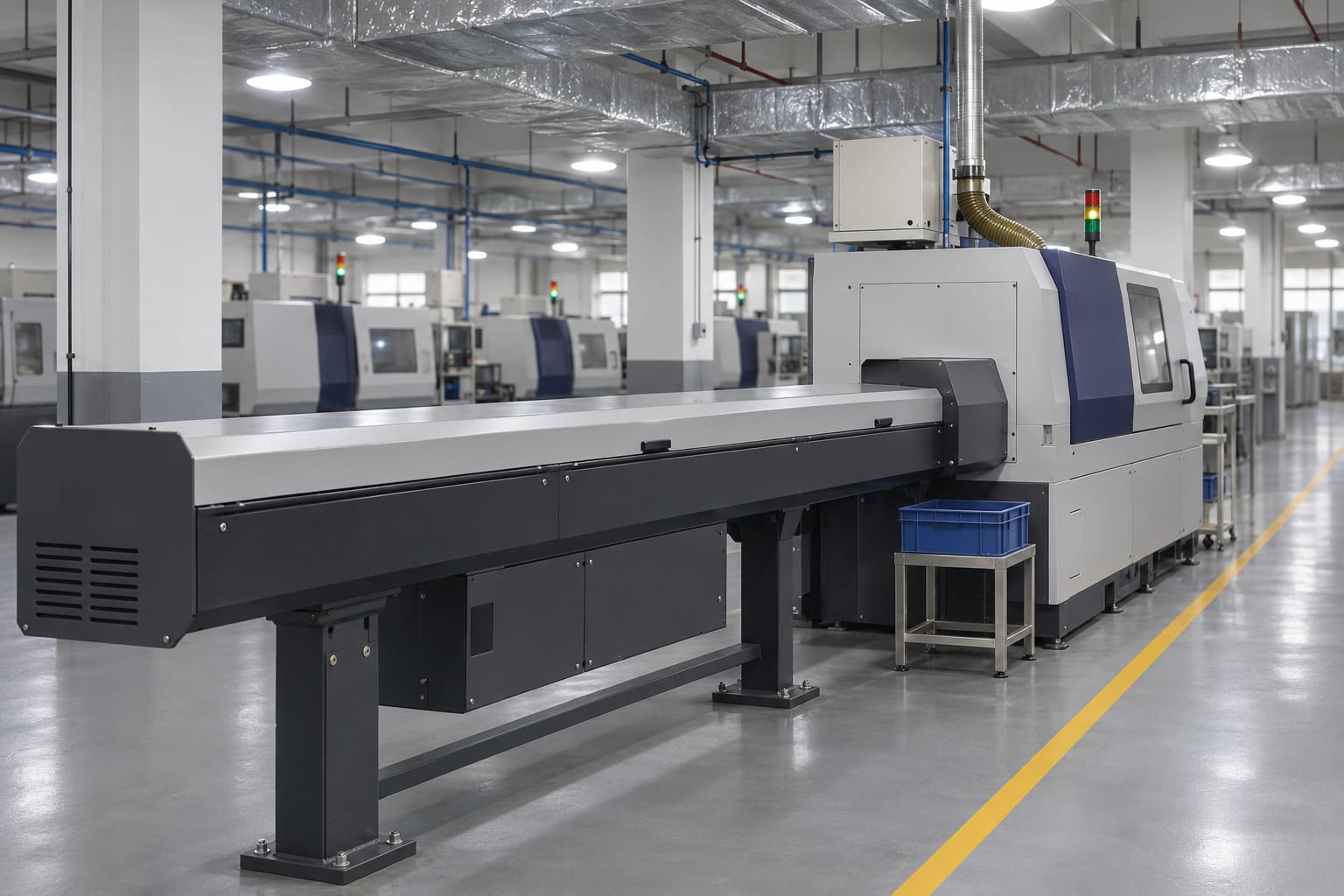
A Swiss-type turning cell with an enclosed bar feeder.
Star GB showed the SB-12RII at its open house in Derby on 3 to 5 November 2026. Star describes how this model can be configured with or without a guide bush to suit the part. [4] [7] [8]
One quote might leave the small recess in the pin. Another might allow for a separate facing operation. Settle which end the assembly needs before comparing the prices. If both are acceptable, ask for each option against the same drawing revision so you can see what the extra work costs.
Ask for the set-up charge separately from the unit price at your trial and repeat quantities. Have the supplier name the proposed support and any separate operations in the quote. If the pin will be faced after turning, check that the price covers verifying the final length after the extra stock comes off.
Send your drawing, material specification, surface treatment, critical tolerances and expected volumes. Mark any requirement for the shaft end face. We can discuss CNC turning or Swiss machining and the inspection needed for the finished part.
Technical references
1. Sandvik Coromant, Turning Handbook
2. Riten, Lathe centres and tool clearance
3. Röhm, Self-centring steady rests for turned parts
4. Star Micronics, SB-12RII product announcement
5. Citizen Machinery, Guide bush operation and stock variation
6. Citizen Machinery, Guide bush and ground stock application
7. Star GB, Derby Open House 2026
8. MTDCNC, Inside the Star GB Open House in Derby
Figures are provided for illustration.
 RETURN_LIST